What is maintainable code? Imagine a developer staring at a critical, urgent bug report. The fix seems simple enough, but in the end it forces a deep dive into an unfamiliar, intricate part of the codebase. What should be a quick task often stretches into a week-long effort. This scenario plays out frequently in software development. According to a study by Bin Lin and Gregorio Robles titled “The Impact of Vocabulary Difficulty and Code Naturalness on Program Comprehension”, developers spend up to 70% of their time simply understanding existing code, not creating new features. In large, distributed teams, this challenge escalates significantly, slowing delivery and fostering frustration.
Unmaintainable code transforms from an asset into a tangible liability. This guide provides an actionable blueprint. It helps you establish practices that ensure your codebase remains valuable. We’ll explore essential pillars: robust coding standards, strategic refactoring, quality-focused code reviews, and the collaborative culture necessary to sustain them.
Table of Contents
The Foundation: Building Maintainable Code Consistently with Standards and Automation
Building a consistent and predictable development environment starts right here. This initial step is fundamental to cultivating maintainable code within a large organizational setting.
Establishing and Enforcing Universal Coding Standards
A single source of truth for code style eliminates subjective debates and solidifies maintainable code practices. Consider adopting established references like PEP 8 for Python or Google’s comprehensive style guides as excellent starting points. Delphi users can benefit from the Object Pascal Style Guide available here.
These guides clearly define rules for naming conventions, formatting, and coding patterns.
Automation improves consistent enforcement across various departments. Automation tools integrate into pre-commit hooks and CI pipelines, automatically formatting code and reducing style-related merge conflicts by up to 80%. They also deliver immediate, objective feedback, preventing slowdowns during human reviews. Google’s mono-repo, for example, leverages automated tooling and company-wide style guides to maintain consistency across millions of lines of code. Your teams should regularly update standards and train on changes to adapt to new practices.
Standardizing Project Structure and Version Control
A standardized branching strategy creates a predictable workflow for your teams. Models like Git Flow or GitHub Flow effectively manage features, releases, and hotfixes, providing clear development paths.
Standardized directory layouts and a modular architecture are crucial. They empower developers to navigate different services or repositories with ease. This practice, well-documented in guides for code organization in large projects, significantly accelerates onboarding. A clear project structure ensures new team members can quickly contribute. Documenting module boundaries and public interfaces also helps minimize cross-team confusion.
| Strategy | Best For | Key Characteristics |
| Git Flow | Projects with scheduled releases and a need for dedicated hotfix branches. | main, develop, feature, release, hotfix branches. |
| GitHub Flow | Teams practicing continuous deployment and delivery (CI/CD). | main is always deployable; features merge directly. |
| Trunk-Based | Experienced teams practicing CI and extensive automated testing. | All developers commit to a single trunk branch. |
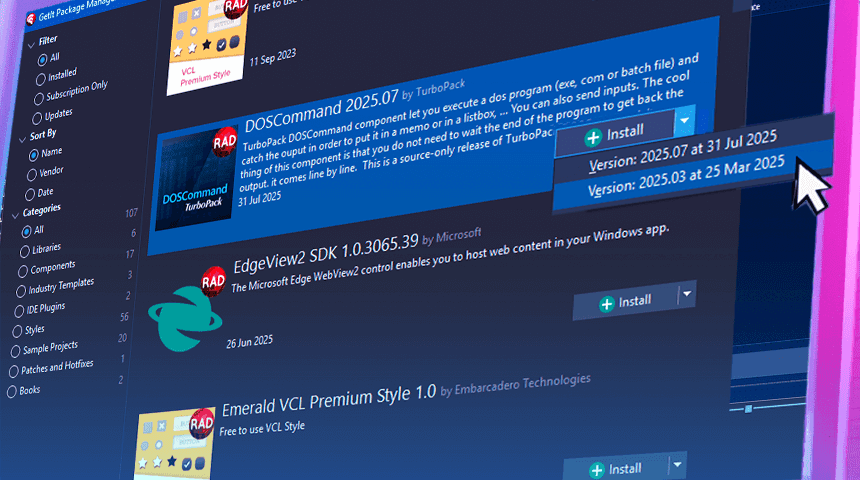
Version Control in RAD Studio
The latest version of RAD Studio 13 introduces GetIt packages versioning support that enables Embarcadero and partners to publish and offer multiple versions of the same package. It also offers users the ability to pick a specific version their applications relies on rather than be forced to install the most recent version.
The Process: Integrating Quality into Every Workflow
This section transitions from static standards to dynamic processes, illustrating how to embed quality checks directly into your development lifecycle.
Driving Maintainability Through Effective Code Reviews
Code reviews are not gatekeeping exercises; they are collaborative tools designed to share knowledge and elevate quality. Effective reviews are essential for building maintainable code.
To conduct better reviews, consider these actionable tips: utilize a checklist focusing on readability, test coverage, and documentation. Teams implementing mandatory reviews report 60% fewer defects in production, demonstrating a significant return on investment. The “human” element of code reviews is equally vital. Foster constructive feedback and rotate reviewers to prevent knowledge silos.
Resources like How to Do Code Review Like a Human offer valuable insights. Stripe, for instance, maintains a culture of mandatory code reviews for every change, ensuring multiple engineers understand new code before it reaches production. Code review analytics can also help identify recurring issues, knowledge gaps, and training needs.
Building a CI/CD Safety Net with Automated Testing
Large teams simply cannot rely on manual testing alone. A comprehensive, automated test suite—encompassing unit, integration, and regression tests—is non-negotiable for stable systems.
How to implement: Integrate quality gates directly into your CI/CD pipeline. Employ static analysis, linting, and minimum test coverage reports. These gates provide objective, automated feedback even before a human reviewer begins, thereby accelerating the review process. Monitor your test suite’s health, watching for flaky tests and slow run times, which helps maintain developer trust in the system. Remember, automated testing is your first line of defense against regressions.

The Long Game: Proactive Maintenance and Knowledge Sharing
Code inevitably degrades over time, and knowledge becomes siloed. This section outlines active strategies to combat this entropy.
Taming Technical Debt with Strategic Refactoring
Refactoring should be treated not as a chore, but as a vital investment in your codebase’s future. Martin Fowler’s seminal work, Refactoring, illuminates this principle: it is key to keeping code maintainable.
How to benefit from refactoring: Implement practical approaches to address technical debt. Allocate a percentage of each sprint for this work, or schedule dedicated “Fixit” sprints, a practice effectively used at Google. Prioritize refactoring efforts by focusing on high-churn, high-risk, or poorly understood modules. These areas often offer the highest return on investment. Leverage automated refactoring tools and IDE support to keep changes safe and consistent, even across distributed teams.
Creating a Living Source of Truth with Documentation
Documentation serves as the code’s “user manual” for future developers. It must be easy to find, update, and use. Good documentation is a cornerstone of maintainable code.
Highlight key documentation types: API contracts (using OpenAPI/Swagger) and architectural decisions (ADRs) are essential. Clear READMEs are also vital. Emphasize the importance of “why” comments for non-obvious code, explaining rationale or potential “gotchas.” Avoid redundant comments that merely restate what the code already does. Treat “docs as code” by keeping documentation in the same repository as the code. Make updating documentation a required part of the code review checklist to ensure accuracy.
Further Reading: Model-Driven Engineering – How it Reduces Cognitive Load in Complex Codebases
The Human Element: Fostering a Culture of Maintainability
This section connects technical practices to the organizational culture that makes these practices truly stick.
Enabling Cross-Departmental Collaboration
Teams working in isolation inevitably create pain points. Propose solutions like cross-team guilds or working groups to foster alignment on shared patterns and dependencies.
Explicit API contracts and schema registries are powerful tools. They prevent one team’s changes from inadvertently breaking another’s service, which is critical for maintainable code in large organizations. Microsoft’s modernization of the Office codebase exemplifies this; the move to a modular architecture with clear interfaces enabled parallel work and improved maintainability across hundreds of developers. Shared tooling, development environments, and onboarding checklists also significantly reduce friction.
Cultivating Continuous Improvement and Ownership
A blameless culture helps teams grow. View incidents and bugs as learning opportunities, not reasons for punishment. This mindset actively supports continuous improvement.
Regular retrospectives need a focus on code quality, addressing process pain points as well. Recognize and reward engineers whose contributions to code health are significant, including impactful refactoring, excellent documentation, and helpful code reviews. This approach cultivates a culture where maintainability is a shared and valued principle.
Frequently Asked Questions About Maintainable Code
This section offers quick, scannable answers to common challenges you might encounter.
How do we enforce coding standards without creating bottlenecks?
Automate enforcement directly in your CI/CD pipeline. Utilize tools like linters and formatters to provide instant, objective feedback without waiting for a human reviewer.
What’s the best way to handle legacy code that lacks tests?
Apply the “Boy Scout Rule”: leave the code better than you found it. When you interact with a legacy module, add characterization tests to lock down its current behavior before making your changes.
How can we balance modularity with the overhead of many services?
Begin with a well-structured monolith or a few coarse-grained services. Only break out a new microservice when a clear domain boundary and team ownership model are firmly established. Avoid premature architectural changes.
How do we keep documentation from becoming outdated?
Treat “docs as code.” Store documentation in the same repository as the code and make updating documentation a required part of the code review checklist for any code change.
Conclusion: Your Maintainable Code Is a Living Asset
Writing maintainable code in a large organization transcends a single tool or a singular rule. It’s about a comprehensive approach: combining consistent standards, integrated quality processes, proactive maintenance, and shared ownership. These practices are designed to empower your teams.
By implementing these strategies, you transform your codebase from a source of technical debt into a scalable, long-term asset. This asset will support, rather than hinder, your teams. Pick one strategy from this guide today. Automate a single linting rule, create a code review checklist, or propose it to your team this week. Small, consistent steps build lasting change.


Reduce development time and get to market faster with RAD Studio, Delphi, or C++Builder.
Design. Code. Compile. Deploy.
Free Delphi Community Edition Free C++Builder Community Edition